Active Travel Infrastructure
Creating a culture of Active Travel
To increase the numbers of people walking, wheeling and cycling, our communities must put people and place before the movement of motor vehicles. New and upgraded infrastructure that makes active and sustainable travel safer, easier and more convenient is essential to meet our 2030 vision that 'Scotland’s communities are shaped around people, with walking or cycling the most popular choice for shorter everyday journeys'.
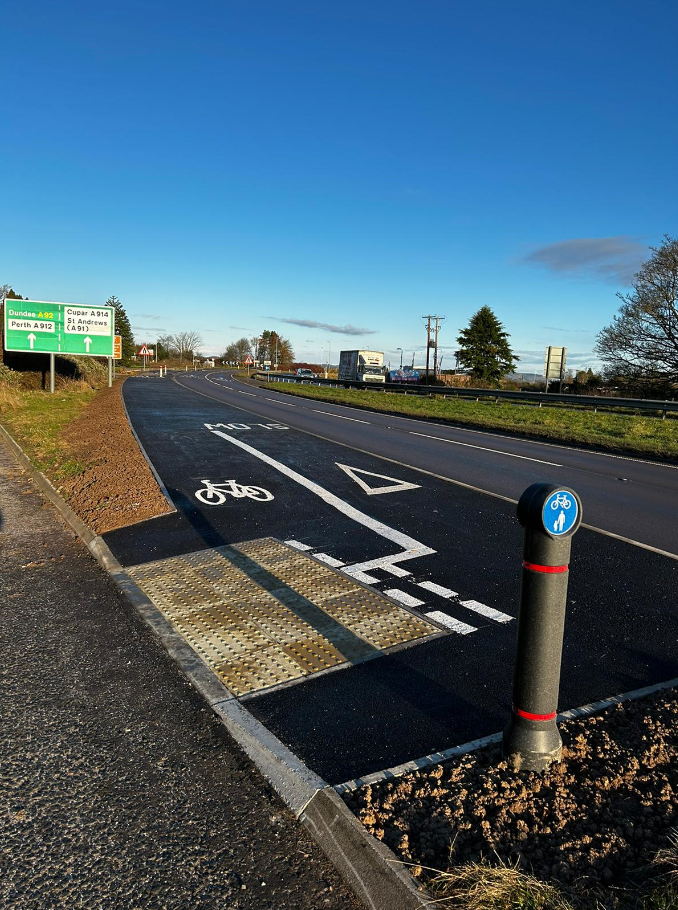
Active travel infrastructure can come in a range of different forms, from footways that are smooth and wide enough for everyone's needs, including wheelchair users and people pushing prams, to cycle tracks that are protected from traffic. Walking, wheeling and cycling should be a feasible option in urban and rural areas alike, with the right solutions applied to each area, using local knowledge and expertise.
Transport Scotland funds new and upgraded active travel infrastructure through a variety of programmes as set out below.
Active Travel Infrastructure Fund Tier 1
The Active Travel Infrastructure Fund (ATIF) Tier 1 provides direct capital investment to all 32 Scottish local authorities to support the planning, design and delivery of walking, wheeling and cycling infrastructure projects. Introduced in 2024/25, the fund replaced the former Cycling, Walking and Safer Routes (CWSR) programme and forms part of Transport Scotland’s wider approach to transforming active travel delivery across Scotland.
Funding is allocated directly to local authorities through their General Capital Grant, giving councils the flexibility to invest in projects that best address local needs and priorities. This can include improvements to footways, crossing facilities, cycle infrastructure, safer routes to schools, accessibility enhancements and other measures that make everyday active travel safer, more convenient and more attractive for people of all ages and abilities.
By empowering local authorities to deliver schemes that reflect local ambitions and community needs, ATIF Tier 1 supports Scotland’s vision of creating places where walking, wheeling and cycling are the preferred choice for shorter everyday journeys.
Learn more about the ATIF Tier 1 projects delivered by local authorities in Scotland.
Tier 2 Active Travel Infrastructure Fund
The Active Travel Infrastructure Fund (ATIF) Tier 2 is the primary vehicle for the Scottish Government to fund active travel infrastructure. This shifts from the previous approach where Sustrans administered Scottish Government funding through its Places for Everyone programme. In 2024-25, we launched the ATIF Tier 2 Construction Fund and will be launching the ATIF Tier 2 Design Fund in 2025-26. The ATIF Tier 2 Construction Fund builds upon the Active Travel Transformation Fund (ATTF), which successfully piloted a new approach to delivery. The ATTF funded construction-ready projects across Scotland in 2023-24, delivering them at pace. The tiered model for infrastructure delivery increases flexibility and control for partners, providing direct investment to those with the capability and capacity to deliver at pace.
The ATIF Tier 2 Design Fund replaces the pre-construction phases of the Sustrans Places for Everyone Fund. Both the ATIF Tier 2 Design and Construction Funds are open to applications from Local Authorities, Regional Transport Partnerships (RTPs) and National Park Authorities (NPAs). It supports the ambitions set out in Active Travel Strategies, Local Transport Strategies and Regional Transport Strategies. The Fund can include support for: new segregated walking, wheeling and cycling facilities; new paths; improved access to schools; improved accessibility through dropped kerbs; barrier removal programmes; and new off-road shared-use paths connecting rural towns and villages. Further information on the types of infrastructure that would be eligible for funding is available in the design guidance.
National Cycle Network
The National Cycle Network (NCN) is one of Scotland’s most important active travel assets, providing a network of walking, wheeling and cycling routes that connect communities, towns, cities and rural areas across the country. The Network supports everyday journeys, leisure trips and tourism, while helping to reduce car dependency and support Scotland’s climate and public health objectives. With almost half of Scotland’s population living within 1km of the NCN, it provides an accessible alternative for many local journeys.
Transport Scotland works closely with the Walk Wheel Cycle Trust (WWCT) to improve, maintain and enhance the National Cycle Network in Scotland. Through this partnership, investment supports safer, more inclusive and attractive routes that enable more people to choose walking, wheeling and cycling for everyday travel.
The Network also contributes to the ambitions set out in the Strategic Transport Projects Review 2 (STPR2), supporting reduced carbon emissions, improved health outcomes, greater accessibility and sustainable economic growth.
Alongside delivering new and upgraded routes, a key priority is improving accessibility by removing barriers that can prevent people from using the network. This ensures that routes are accessible to a wider range of users, including people using wheelchairs, adapted cycles, mobility aids, pushchairs and cargo bikes.
A recent example of this approach can be seen on the Deeside Way (NCN 195) in Aberdeen, where Aberdeen City Council, supported through the National Cycle Network Accessibility Fund and working in partnership with the Walk Wheel Cycle Trust, delivered a series of accessibility improvements along a 10km section of the route. Thirteen restrictive barriers were replaced or upgraded, alongside resurfacing works and improved wayfinding. The changes have significantly improved access for local residents, including members of the Newton Dee Camphill Community who use adapted cycles for everyday journeys and recreational trips. The project demonstrates how relatively small scale interventions can remove barriers to access and unlock significant benefits for local communities.
Recent investment has also supported major route improvements elsewhere on the Network, including the resurfacing of 7.7km of the Water of Leith path in Edinburgh and safety improvements on NCN routes in Angus. These projects help ensure that the National Cycle Network remains a safe, comfortable and attractive option for people travelling actively across Scotland.
Further information
Ian Findlay Path Fund
The Ian Findlay Path Fund (IFPF), delivered by Paths for All (now Walking Scotland) and supported by Transport Scotland, was established to help communities create and improve local path networks, making it easier for people to walk, wheel and cycle for everyday journeys.
Between 2022 and 2026, the fund invested more than £5 million in 62 projects across Scotland, supporting community organisations, charities and local partners to deliver lasting improvements to local active travel networks. Projects included new path links, accessibility enhancements, surface improvements, lighting, signage and seating, helping to make everyday walking and wheeling safer, easier and more attractive for people of all ages and abilities.
The Ian Findlay Path Fund concluded in 2026, leaving a lasting legacy of improved community paths and stronger local capacity to develop future active travel projects.
Find out more about community path funding and Walking Scotland’s work to support active travel.
Places for Everyone
For more than a decade, Places for Everyone (PfE), delivered by Walk Wheel Cycle Trust (formally known as Sustrans) and funded by Transport Scotland, was Scotland’s flagship active travel infrastructure programme. The fund supported communities, local authorities and partner organisations to develop and deliver projects that made walking, wheeling and cycling safer, easier and more accessible across the country. Together with its predecessor programme, Community Links, it helped deliver hundreds of miles of new and improved active travel routes and supported the transformation of streets and public spaces throughout Scotland.
The Places for Everyone programme formally concluded in December 2025. Projects that were being supported through the programme have either been completed or transitioned to Transport Scotland’s new funding and delivery arrangements, ensuring continued support for the development and delivery of high quality walking, wheeling and cycling infrastructure.
Trunk roads
Through its Trunk Road Casualty Reduction Team (TRCRT), Transport Scotland has been working in partnership with the Trunk Road Operating Companies (OCs) BEAR and AMEY to develop and deliver active travel schemes on the trunk road network since June 2021.
Contributions from the active travel budget have addressed a recognised funding gap. Funding of over £11 million between 2021-22 and 2023-24 has delivered over 24km of new or improved paths, three signalised pedestrian crossings and funding to construct more than 26 active travel infrastructure schemes. Examples include:
- A898/A82 Erskine Bridge - new shared use footway/cycleway – 450m
- A78 Seamill to Montfode - Phases 1 & 2 - upgraded shared use footway/cycleway – 3.35km
- A9 Kessock Bridge to North Kessock – 1.6km of upgrades to the existing shared use path
- A830 Corpach to Loch Linnhe Holiday Park – 900m of new footway
- A83 Minard - Improvements to existing footways in the village and a new footway linking the village to the adjacent Crarae Gardens, a National Trust Scotland site.
- A92 Balfarg to New Inn – Extension of previously constructed shared use foot and cycleway
- A726 East Kilbride – Extension of previously constructed segregated foot and cycle paths linking with local authority network.
Numerous cycle / pedestrian counters have been installed across the trunk road network. The data from these is used to monitor user numbers with a view to measuring the success of new schemes and to assist in prioritising the strategy for the provision of new or upgraded infrastructure in the future.
An example of this is on the A96 between Lhanbryde and Loch Oire where a new shared use facility was constructed early in 2022. Survey data from the new counter indicates up to 60 movements a day whereas before there was no facility.
Rail
The Transport Scotland Active Travel programme has supported other parts of the transport portfolio to help deliver shared priorities and outcomes.
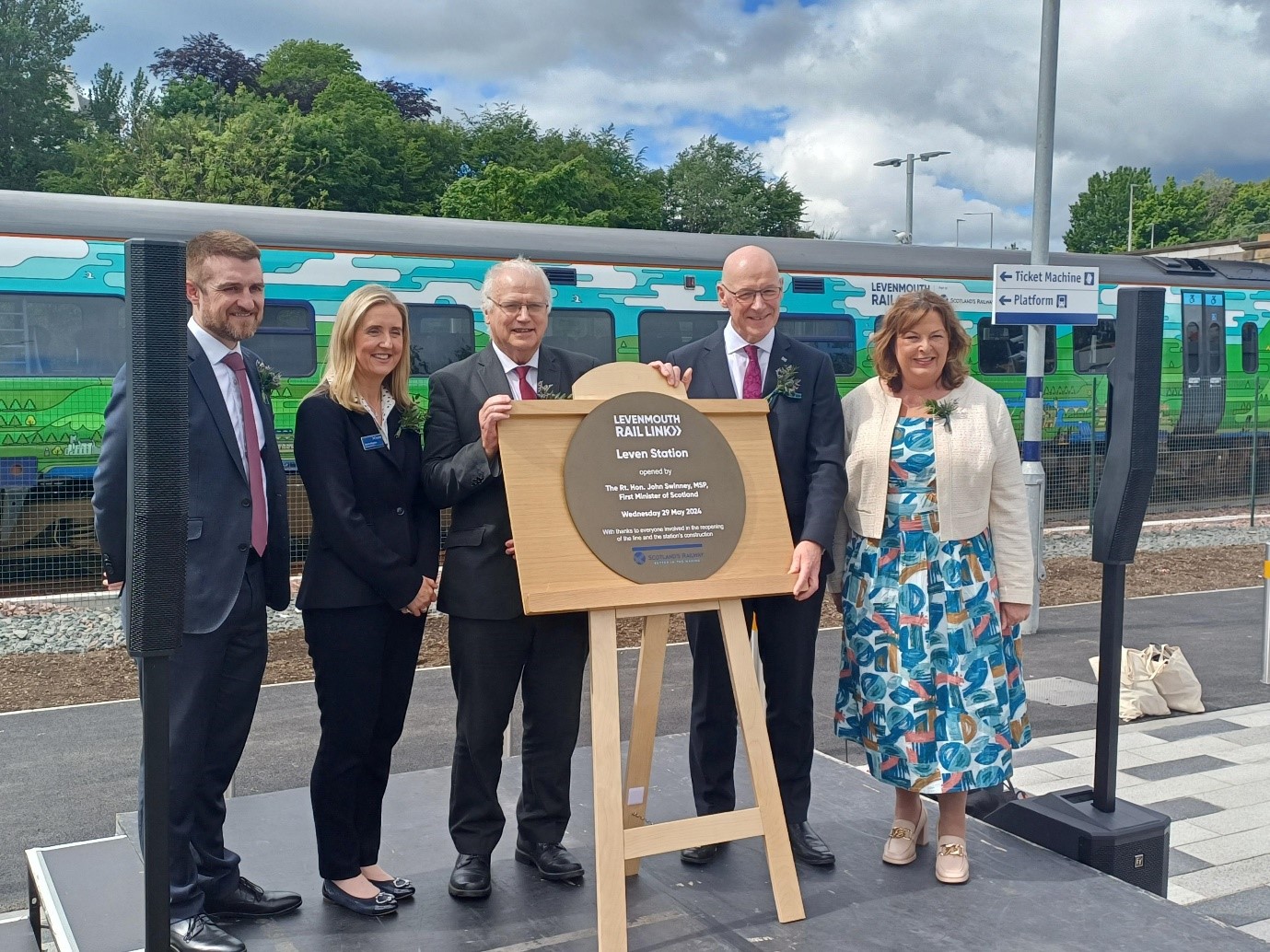
Most recently, this includes the new Leven rail line and stations where funding has delivered active travel routes into the Cameron Bridge and Leven stations, as well as two new bridges that provide invaluable connections across communities in the Leven area.